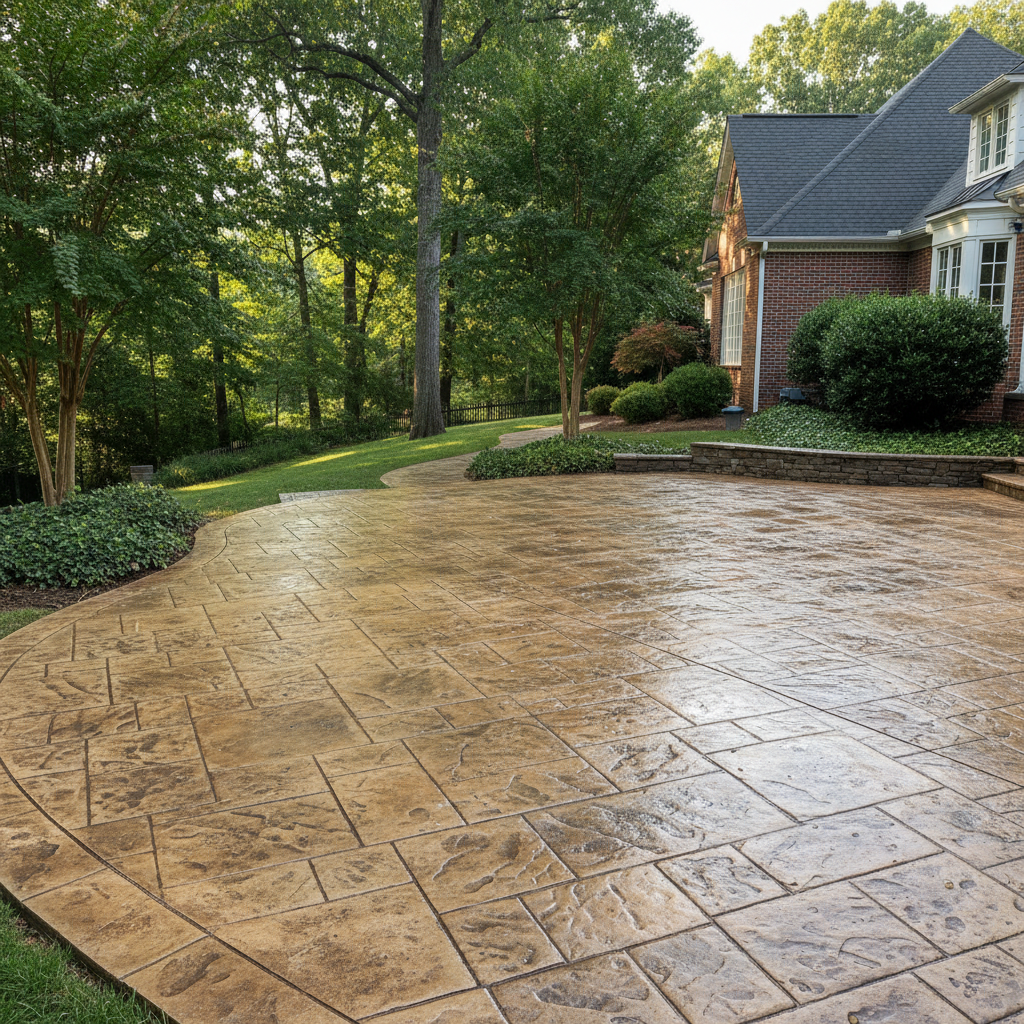
Alright, let's talk about your stamped concrete. You put money into it for a good reason – it looks fantastic, really adds personality, and let's be honest, it's way more interesting than just plain gray. But just like anything else around your Mountain Brook home, it needs a little love to keep it looking sharp. I’ve seen a ton of stamped concrete jobs over the years, and the ones that truly stand the test of time are the ones that get regular, proper care. It’s not rocket science, but there are a few key things you should know, especially with our Alabama weather, you know?
Make Your Investment Last Longer
The single most important thing you can do to make your stamped concrete last is to keep that sealer in good shape. Think of the sealer as sunscreen for your concrete. Here in Alabama, with our really intense UV rays, that sun can fade colors and break down the sealer much faster than it would in cooler places. A sealer that might hold up for four years up north could easily need reapplying every two to three years right here in Vestavia Hills or Mountain Brook.
When we at Concrete Vision Co. put in stamped concrete, we use top-notch sealers specifically made to handle our climate. Even the best sealer, though, won't last forever. Resealing regularly is super important; it keeps the color from fading, stops moisture from getting in, and protects against everyday wear and tear.
Here's another thing to keep in mind: heavy stuff. Try not to park big vehicles or put extremely heavy items on your stamped concrete, especially when it's scorching hot outside. That combination of weight and heat can sometimes leave dents or cause cracks.
Looking After It: What You Need to Do
Keeping your stamped concrete in good shape isn't a huge burden, but it does take some consistency. Here’s what I always tell my clients:
- Clean it up often: Sweep off things like leaves and dirt. If organic stuff just sits there, it can break down and stain the surface. For tougher grime, a simple wash with some mild detergent and water usually does the trick. You can even use a pressure washer on a low setting, just be careful not to blast away the sealer or damage the concrete itself.
- Keep an eye out for stains: If you spill something like oil or grease, clean it up as fast as you can. The sealer helps, but it’s not magic.
- Reseal it: This is probably the most crucial regular maintenance task. Most pros suggest resealing every 2-5 years, but with our strong sun and humidity, aiming for every 2-3 years is a really smart move. A good way to check if your sealer is still doing its job is to put a few drops of water on a clean, dry spot. If the water beads up, you’re probably still good. But if it soaks in and darkens the concrete, well, it’s time to reseal.
- Handle winter worries: Even though our winters aren't as harsh as some places, we still get freezing temperatures. Water can sneak into tiny pores in the concrete, and when it freezes, it expands, which can cause cracks. Make sure your concrete is sealed well to stop water from soaking in. If you use de-icing salts, pick the non-corrosive kind or just use sand, because some de-icers can actually damage the concrete over time.
Signs of Trouble
Watch out for these clues that your stamped concrete might be trying to tell you it needs more than just a quick clean:
- Fading or looking dull: If that vibrant color you loved is starting to look washed out or uneven, that’s a big hint your sealer is getting thin and the UV rays are hitting the pigment.
- Cracks: Hairline cracks can happen, sure, but if you see cracks getting wider, spreading across big sections, or having jagged edges, that’s a definite red flag.
- Spalling or flaking: This is when the top layer starts to chip, peel, or break apart. It exposes the concrete underneath and means the surface is falling apart.
- Uneven or sinking spots: If parts of your stamped concrete are settling, sinking, or becoming uneven, it could point to problems with the base layer or drainage.
- Stubborn stains or algae: If you’re cleaning regularly but still fighting persistent stains, mold, or mildew, the concrete might be soaking up more moisture than it should, suggesting a compromised sealer or drainage issues.
When to Call the Experts
While you can certainly handle some minor fixes yourself, there are definitely times when you need to bring in the pros. Don't let a small problem turn into a massive, expensive repair. Here's when to give us a call:
- Structural cracks: If a crack is wider than a credit card, or if the whole slab is sinking or uneven, you're probably dealing with a structural issue that needs an expert to look at it. This often points to soil moving underneath, which is common in areas with our expansive clay soils, or drainage problems.
- Lots of spalling or surface damage: If big areas are flaking or pitting, it's way beyond just a simple reseal. We can check out the damage and suggest resurfacing or a more serious repair.
- Worries about color matching: If you've tried a small repair and just can't get the color to blend, a professional can often make it look much more seamless.
- Drainage problems: If you notice water consistently pooling on your stamped concrete, or erosion around the edges, that’s a sign of a drainage issue that needs fixing before it causes even more damage.
- You're just not sure: Honestly, if you're looking at your stamped concrete and you're worried, or you simply don't know what to do, call us. We'd much rather come out and give you an honest assessment than have you try a fix that makes things worse, wouldn't you agree?
Stamped concrete, when maintained correctly, can easily last for decades. It's all about being proactive, especially with the challenges our local climate throws at us. Keep an eye on it, give it a good cleaning every now and then, and don't hesitate to reach out to Concrete Vision Co. if something looks off. We're here to help you protect your investment.